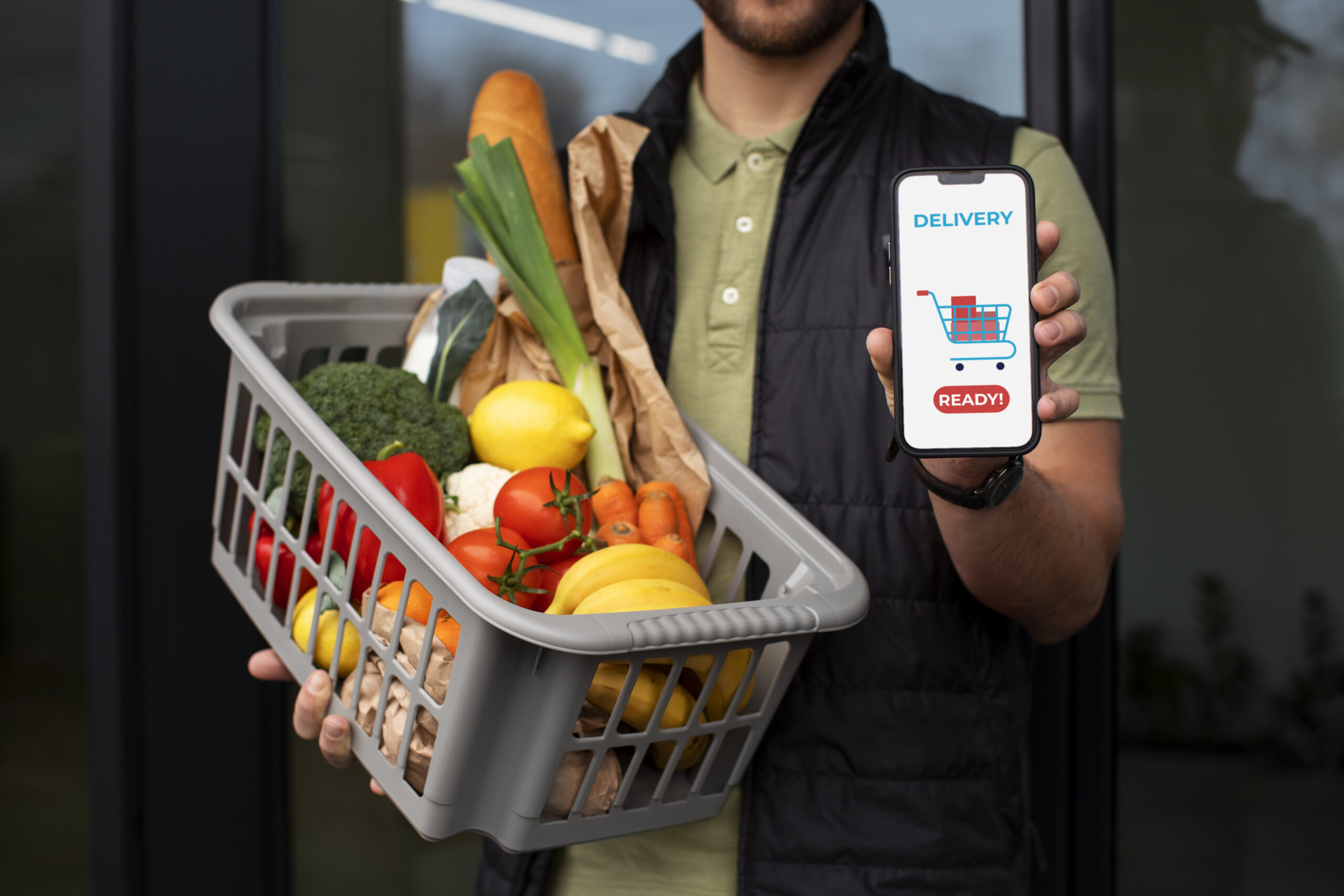
How to Build a Multi Vendor Grocery Delivery App Like Instacart
Introduction
Instacart redefined North American grocery retail by connecting consumers with multiple grocery stores through a single digital platform. In Canada, this model has created massive market opportunity for entrepreneurs, supermarket chains, and grocery startups looking to build their own multi-vendor grocery delivery ecosystems.
Building a multi-vendor grocery delivery app like Instacart is not about copying a product — it is about engineering a scalable marketplace architecture that addresses the specific operational and commercial needs of your business and your target market.
At Aprodence, we have built multi-vendor grocery platforms from the ground up for Canadian clients. This article provides a comprehensive, experience-backed breakdown of how to build a grocery delivery app like Instacart — covering architecture, features, technology, timelines, and costs.
Understanding the Instacart Business Model
Before building a platform like Instacart, it is essential to understand the components of its business model:
- A marketplace connecting multiple grocery retailers to a shared customer base
- Personal shoppers or delivery drivers fulfilling orders from physical stores
- Commission-based revenue from grocery retailers for sales driven through the platform
- Delivery fee revenue and membership subscriptions from consumers
- Advertising revenue from grocery brands promoting products within the app
Your grocery delivery app does not need to replicate Instacart’s exact model. Understanding its components allows you to design a business model suited to your specific market, whether that is a regional multi-vendor marketplace, a single-chain delivery app, or a hyperlocal neighborhood grocery platform.
Step-by-Step: How to Build a Multi Vendor Grocery Delivery App
Step 1: Define Your Business Model and Market
Determine the scope of your marketplace: Will you operate across multiple cities or focus on a hyperlocal area? Will vendors fulfill deliveries independently or will you manage a centralized delivery fleet? Will your revenue model be commission-based, subscription-based, or advertising-driven? These decisions directly shape your app architecture.
Step 2: Plan Your App Architecture
A multi-vendor grocery delivery platform requires four interconnected systems:
- Customer Application: product browsing, cart management, checkout, payment, order tracking
- Vendor Dashboard: product and inventory management, order processing, analytics
- Delivery Partner App: order pickup assignments, navigation, proof of delivery
- Admin Panel: platform management, vendor approvals, revenue tracking, analytics
Each system must communicate through a shared API layer with real-time data synchronization.
Step 3: Design the User Experience
The customer-facing app is the primary growth driver of your marketplace. Key UX principles for grocery delivery apps include:
- Search-first design — customers need to find products instantly
- Minimal checkout friction — saved addresses, payment methods, and reorder functionality
- Transparent delivery tracking — real-time GPS with estimated arrival updates
- Clear product information — images, descriptions, allergen data, and pricing
Step 4: Build the Core Feature Set
Based on our experience developing platforms like Vicart, the minimum viable feature set for a multi-vendor grocery app includes:
Customer Features
- Multi-vendor product catalog with unified search
- AI-powered product recommendations
- Real-time inventory visibility
- Multiple payment methods
- Live delivery tracking
- Order history and easy reorder
Vendor Features
- Self-service product and inventory management
- Order notification and fulfillment workflow
- Sales and revenue reporting
- Promotional pricing tools
Admin Features
- Vendor onboarding and verification
- Commission management and automated payouts
- Platform-wide analytics
- Delivery zone and fleet management
Step 5: Choose the Right Technology Stack
The technology foundation of your grocery app determines its performance, scalability, and long-term maintenance costs. Aprodence builds multi-vendor grocery platforms using:
- Flutter for cross-platform iOS and Android customer and driver apps
- React.js for vendor dashboards and admin web portals
- Node.js and Express.js for scalable backend API services
- MongoDB for product catalog and order management
- Firebase for real-time notifications and live tracking
- AWS for cloud hosting, auto-scaling, and CDN delivery
- Stripe or PayBright for Canadian payment processing
Step 6: Integrate Third-Party Services
A production-ready grocery delivery app requires integration with specialized third-party services:
- Google Maps Platform or Mapbox for delivery tracking and route optimization
- Twilio or Firebase Cloud Messaging for SMS and push notifications
- Stripe, Square, or Moneris for Canadian payment processing
- SendGrid or similar for transactional email
- Analytics platforms for user behavior and performance monitoring
Step 7: Test Across All Platform Components
Multi-vendor marketplace testing must cover the complete order lifecycle: product search and cart across multiple vendors, simultaneous vendor inventory updates, end-to-end payment processing, real-time order tracking accuracy, and vendor and admin dashboard functionality under concurrent load.
Step 8: Launch and Vendor Onboarding
A successful launch requires onboarding a sufficient number of quality vendors before going live. Aprodence recommends a phased launch strategy: start with three to five anchor vendors, validate the platform under real order volumes, then expand vendor onboarding progressively.
How Long Does It Take to Build a Grocery App Like Instacart?
Based on our development experience, a full-featured multi-vendor grocery delivery platform takes:
- Discovery and architecture planning: 2 to 3 weeks
- UI/UX design: 3 to 4 weeks
- Backend API and database development: 6 to 8 weeks
- Customer and vendor app development: 8 to 12 weeks
- Integration, testing, and QA: 3 to 4 weeks
- Total estimated timeline: 22 to 31 weeks for a full-featured platform
What Does It Cost to Build a Grocery App Like Instacart in Canada?
Development cost depends on feature scope, team size, and technology choices. Aprodence estimates for Canadian grocery delivery platforms:
- MVP with core features: CAD $30,000 to $55,000
- Full-featured multi-vendor platform: CAD $55,000 to $120,000
- Enterprise-scale grocery marketplace: CAD $120,000+
Ongoing hosting, maintenance, and feature development typically adds CAD $1,500 to $5,000 per month post-launch.
Why Build with Aprodence Instead of Using a White-Label Solution?
White-label grocery platforms offer faster time-to-market but impose critical limitations: you cannot control the core architecture, you share infrastructure with competitors, and you cannot build proprietary features that differentiate your marketplace.
Building with Aprodence means you own a scalable, extensible platform that grows with your business — not a rented product with structural ceilings.
Conclusion
Building a multi-vendor grocery delivery app like Instacart is an achievable, commercially powerful business move for Canadian grocery businesses and entrepreneurs. Success requires thoughtful business model design, a scalable technical architecture, and a development partner with direct grocery platform experience.
Aprodence has built grocery delivery platforms that operate at production scale in competitive Canadian markets. Our team brings the technical expertise and real-world experience necessary to take your grocery marketplace from concept to launch.
Frequently Asked Questions
Yes. An MVP version focusing on core multi-vendor ordering and delivery tracking can be developed for CAD $30,000 to $55,000. Features can be added progressively as the platform scales.
No. Your platform can integrate with third-party delivery networks or allow individual vendors to manage their own delivery logistics.
Aprodence builds self-service vendor onboarding flows with document verification, product catalog import tools, and guided setup processes to minimize manual onboarding effort.
Yes. Multi-city and multi-region support is built into the architecture from the start, allowing you to expand delivery zones without rebuilding the platform.
Aprodence integrates Canadian-approved payment gateways including Stripe, Moneris, and PayBright, supporting credit cards, debit cards, Apple Pay, Google Pay, and buy-now-pay-later options.