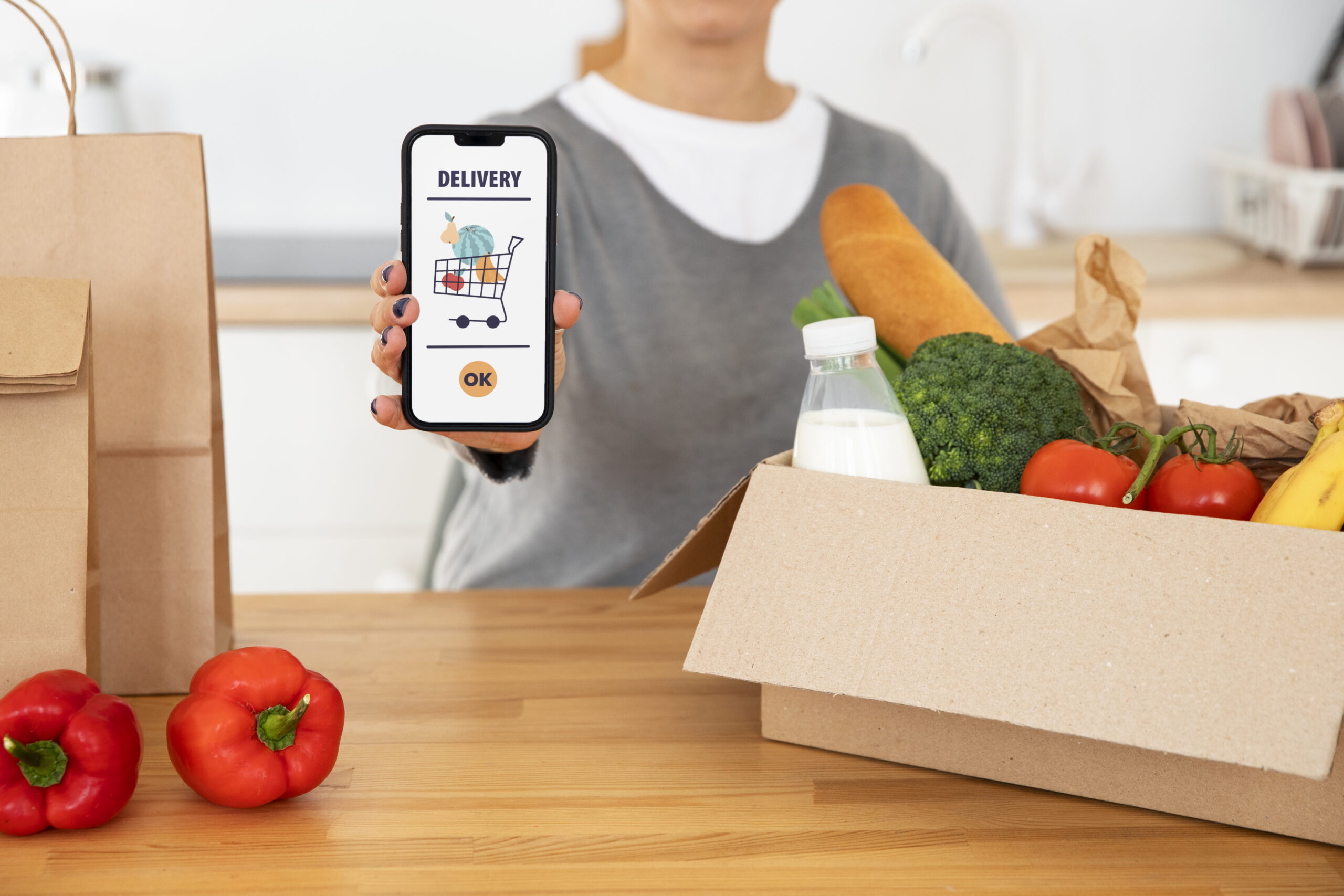
From Farm to Business: How a Smart Delivery Platform Is Fixing America’s Broken Food Supply Chain
Introduction
Here’s a number that should bother anyone in the food business: the United States wastes roughly 30 to 40 percent of its food supply every year. Some of that waste happens at home. But a significant portion happens in the supply chain — between the farm and the restaurant kitchen.
Produce that sits in a distributor’s warehouse. Deliveries that arrive late because no one optimized the route. Restaurants over-ordering because they have no visibility into what’s available today. Farmers dumping crops because they couldn’t find buyers fast enough.
This isn’t a farming problem or a restaurant problem. It’s a connectivity problem. And the fix is a technology layer that connects all sides of the supply chain in real time.
That technology is a B2B farm-to-business delivery platform — and it’s already proving itself.
The Real Cost of an Inefficient Food Supply Chain
Most restaurant owners accept supply chain friction as just part of doing business. But when you look at the actual costs, it’s startling.
Consider a mid-sized restaurant that orders produce three times a week. If even one delivery per week arrives late or with lower quality than expected, that’s:
- Menu items that can’t be served as planned
- Kitchen staff scrambling to adapt on the fly
- Customer satisfaction taking a hit
- Profit margins shrinking due to waste and last-minute substitutions
Multiply that across a chain of restaurants or a catering operation, and the financial impact becomes very real, very fast.
And on the farmer’s side: a local farm selling to a distributor often receives only 20 to 30 cents on every dollar the end business pays. The rest goes to the middlemen. Direct access to business buyers changes that equation completely.
How a B2B Farm-to-Business Platform Changes the Equation
The core idea is straightforward: remove the layers between farmer and buyer. Let a restaurant place an order directly with a farm, and let a driver pick it up and deliver it — all managed through a single platform.
But the technology makes it more than just a marketplace. Here’s what a well-built platform actually does:
Real-Time Inventory Visibility
Restaurants can see exactly what’s available on any given day — not what was available last Tuesday when a catalog was last updated. This means smarter ordering, less over-purchasing, and menus built around what’s actually fresh and in season.
Predictable, Trackable Deliveries
Every order on the platform has GPS tracking attached to it. A kitchen manager can see that their delivery is 20 minutes away and start prep accordingly. No more calling the driver, no more uncertainty.
Optimized Logistics
The platform automatically calculates the most efficient delivery routes. This means produce spends less time in transit — which directly translates to fresher deliveries and less spoilage.
Direct Financial Relationships
Without a distributor in the middle, farmers receive a higher percentage of the sale price. Businesses often pay less while farmers earn more — because the platform cuts out the middleman’s margin, not the value.
What This Looks Like in Practice: The Sprouzee Example
Aprodence built Sprouzee as exactly this kind of platform. A few results from real operations:
- Businesses reduced their procurement time by 40% after switching to the platform
- Optimized driver routing reduced transit time and food spoilage during delivery
- Farmers connected directly with restaurant and grocery buyers without broker dependency
- The platform maintained reliability even in rural areas with weak mobile connectivity
What makes Sprouzee’s results significant is that they weren’t achieved in a controlled environment. These are real supply chain operations, with real farms and real restaurants, running daily.
Why Now Is the Right Time for This Technology in the USA
The US food industry has a few conditions that make it especially ready for this kind of platform right now.
The Farm-to-Table Movement Is Mainstream
American consumers are actively asking restaurants where their food comes from. Restaurants that source locally and directly have a marketing advantage — and a platform that connects them to local farms makes that sourcing practical, not just aspirational.
Post-Pandemic Supply Chain Sensitivity
The disruptions of the last few years made businesses acutely aware of how fragile traditional supply chains are. Companies are actively looking for more resilient, direct sourcing solutions. A farm-to-business platform offers exactly that — diversified supply, direct relationships, and real-time visibility.
Restaurant Technology Adoption Is Accelerating
Online ordering, kitchen management systems, and delivery platforms are now standard. The next frontier is supply-side technology — tools that help restaurants manage procurement as efficiently as they manage customer orders.
What to Look for in a B2B Farm-to-Business Platform
If you’re evaluating platforms or planning to build one, here are the capabilities that actually matter:
- Real-time order tracking with GPS — not just a delivery window, but live location
- Bulk ordering support with flexible scheduling
- Offline reliability — especially important if your supply base includes rural farms
- Secure, multi-method payment processing
- Easy onboarding for both farmers and business buyers
- Admin tools for platform operators to manage orders, disputes, and settlements
A platform missing any of these isn’t fully solving the problem — it’s just shifting it.
The Opportunity for Entrepreneurs
If you’re reading this as an entrepreneur rather than a restaurant owner or farmer, here’s the other angle: this is a significant market opportunity.
The US fresh produce market is valued in the hundreds of billions of dollars annually. Even capturing a fraction of that through a well-designed B2B delivery platform represents a substantial business. And the technology to build it is proven — Sprouzee exists as evidence of that.
The most successful platforms in this space will be those that combine solid logistics technology with deep understanding of local agricultural communities. That means focusing on specific regions first — building trust with local farms and restaurants before expanding.
Conclusion
The food supply chain doesn’t have to be broken. The technology to fix it exists. The question is whether the businesses and entrepreneurs in the food industry are ready to use it.
A B2B farm-to-business delivery platform isn’t just a tech product — it’s a new way of doing business that benefits farmers, buyers, and ultimately the consumers who want fresher, more responsibly sourced food.
Aprodence builds platforms like this. If you want to explore what a solution looks like for your market or business, reach out for a free consultation at aprodence.com.
Frequently Asked Questions
The traditional food supply chain relies on multiple intermediaries — aggregators, distributors, and brokers — between farmers and business buyers. Each layer adds cost, time, and a point of failure. Technology platforms that enable direct farm-to-business transactions remove these inefficiencies.
By optimizing delivery routes, reducing transit time, and giving buyers real-time visibility into available produce, platforms reduce both spoilage in transit and over-ordering by businesses. Sprouzee achieved measurable reductions in food waste through optimized routing alone.
No. Independent restaurants, small cafe owners, hotels, and catering companies all benefit — often more than chains, because they typically have less bargaining power with traditional distributors. Direct access to farmers levels the playing field.
Farmers receive a higher share of the sale price by selling directly to businesses rather than through distributors. They also gain access to a broader market of business buyers and have better visibility into demand, which helps them plan production more accurately.
B2C apps like DoorDash or UberEats connect restaurants with individual consumers. A B2B platform connects farms with business buyers — the restaurants themselves. The focus is on bulk ordering, logistics optimization, and supply chain management rather than individual meal delivery.
If a platform already exists in your area, the first step is onboarding and connecting with local farm suppliers. If you want to build one for your market, working with an experienced development partner like Aprodence — who has built Sprouzee — gives you a proven starting point.