How to Build a B2B Food Supply Chain App Like Sprouzee: A Complete Guide for Business Owners
Introduction
If you’ve been thinking about building an app that connects farms with businesses — or you want to digitize a food supply chain in your region — you’re in the right place. And you probably have some version of the same questions running through your head:
- Where do I even start?
- What features does it actually need?
- How much will it cost?
- How do I find the right people to build it?
This guide answers all of those questions — without assuming you have a technical background. By the end, you’ll have a clear picture of what it takes to build a B2B food supply chain app and how to move from idea to live product.
Step 1: Get Clear on the Problem You’re Solving
Before thinking about features or budgets, spend time getting specific about the problem. The best apps — including Sprouzee — were built around one clearly defined pain point.
Ask yourself:
- Who is struggling? (Farmers, restaurants, distributors, or all three?)
- What’s the specific friction? (Slow deliveries? No visibility? Too many middlemen?)
- What does success look like? (Faster procurement? Less waste? Better margins for farmers?)
The more specific your answer, the better your app will be. A vague problem leads to a vague solution — which leads to an app nobody uses.
For Sprouzee, the problem was clear: farms and business buyers had no direct, efficient connection. The solution followed logically from that.
Step 2: Map Your Users and Their Needs
A B2B food supply chain app typically has three types of users. Each has completely different needs, and your app needs to serve all of them well.
Business Buyers (Restaurants, Cafes, Grocery Stores)
They need: easy product browsing, bulk ordering, flexible delivery scheduling, and real-time order tracking. Their biggest frustration is uncertainty — not knowing what’s available or when their order will arrive.
Farmers / Suppliers
They need: a simple way to list products, manage inventory, and receive payments. They’re often not tech-savvy, so the interface needs to be extremely simple. Complicated dashboards will result in low adoption.
Delivery Drivers
They need: clear pickup and delivery instructions, route optimization, and easy proof-of-delivery capture. Anything that slows them down on the road hurts the whole platform’s performance.
Getting these three user experiences right is the biggest challenge in building this type of platform. A developer who has done it before will save you a lot of expensive trial and error.
Step 3: Define Your MVP (Start Small, Launch Fast)
MVP stands for Minimum Viable Product. It means: what is the smallest version of your app that actually solves the core problem for real users?
For a B2B farm-to-business app, a solid MVP typically includes:
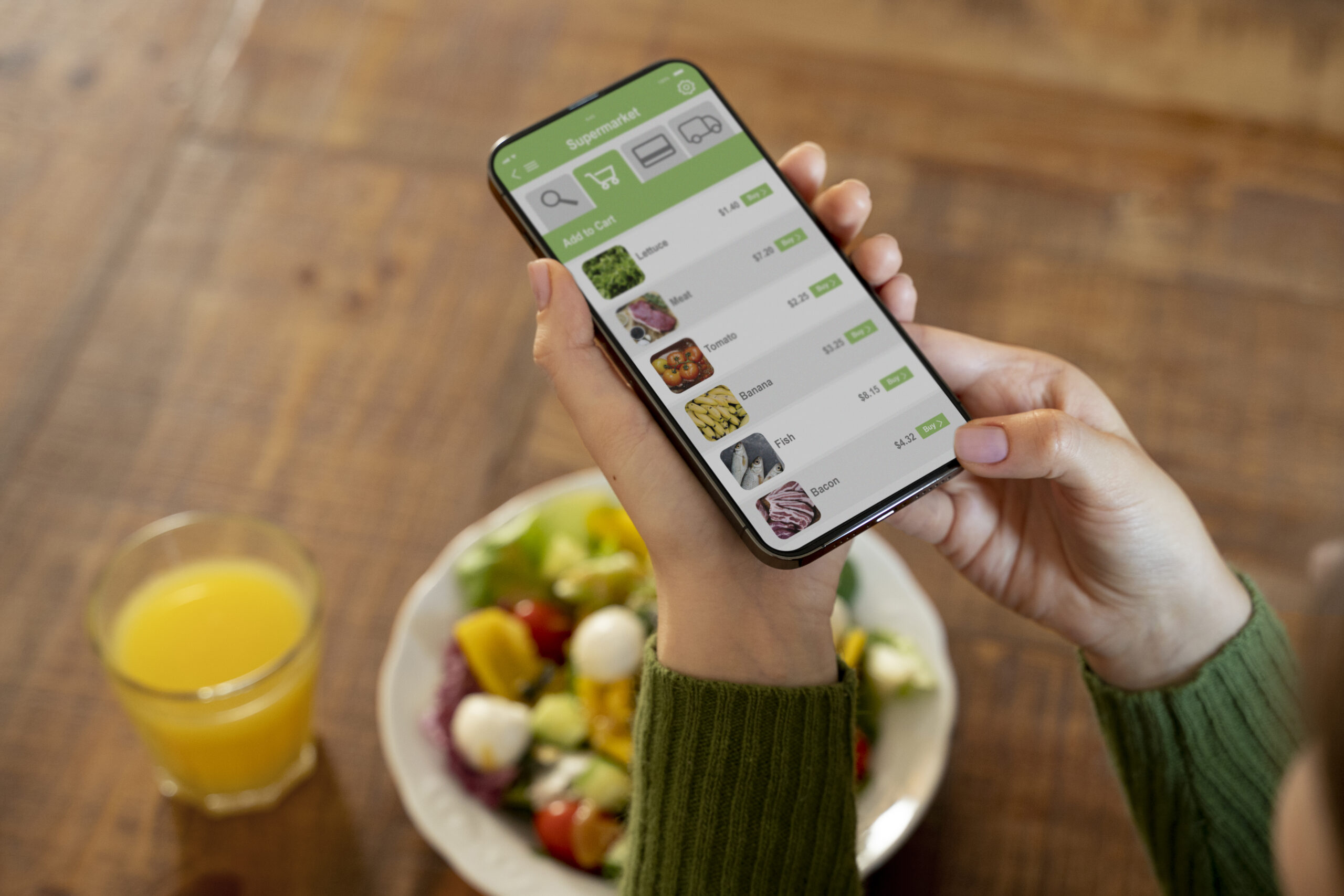
- Buyer app: product browse, place order, track delivery
- Driver app: receive assignment, navigate route, confirm delivery
- Admin dashboard: manage orders, view deliveries, handle payments
What it does NOT need in version one:
- Advanced analytics or reporting
- In-app messaging between farmers and buyers
- Ratings and review system
- Loyalty programs or promotions engine
These are valuable features — but building them before you have real users and real feedback is one of the most common (and expensive) mistakes in app development. Launch lean, learn fast, and build version two based on what real users actually need.
Step 4: Choose the Right Technology (In Plain English)
You don’t need to choose the tech stack yourself — that’s your developer’s job. But understanding the basics helps you ask the right questions and avoid being over-charged for unnecessary complexity.
Mobile App Framework
React Native and Flutter are the two most popular choices for apps that need to run on both iPhone and Android. Either works well. The important thing is that your developer doesn’t build separate native apps for iOS and Android in the beginning — that doubles cost and time without adding much benefit at the MVP stage.
Backend (The Engine)
Node.js is a common, reliable choice. What matters more than the specific technology is that the architecture is scalable — meaning it can handle more users and orders as you grow without needing to be rebuilt.
GPS and Route Optimization
Google Maps API is the standard. It’s reliable, well-documented, and handles both real-time tracking and route optimization. For a basic MVP, this is the right choice.
Payments
Stripe is the most common choice for US-based platforms. It supports all major payment methods, handles compliance automatically, and is developer-friendly. If you plan to operate in multiple countries, multi-gateway support becomes important.
Notifications
Firebase Cloud Messaging is the industry standard for push notifications. It’s free, reliable, and — importantly — works in low-connectivity environments. If any part of your supply chain involves rural farms, this matters.
Step 5: Find the Right Development Partner
This is where many entrepreneurs make costly mistakes. The cheapest developer is rarely the right developer for a project like this.
What to look for:
- Have they built logistics or delivery platforms before? (Not just any app — specifically multi-sided platforms with tracking and routing)
- Can they show you live examples of their work?
- Do they offer a discovery workshop before writing code? (A team that dives straight into development without deeply understanding your problem is a red flag)
- Are they transparent about timeline and cost — including what happens if requirements change?
Aprodence offers a free consultation and product roadmap before any development begins. That roadmap gives you a clear picture of timeline, cost, and what version one of your platform will look like. It also protects you from scope creep and budget surprises.
Step 6: Plan for Launch and Growth
Building the app is only half the job. Getting the right users onto it is the other half — and this is where many well-built platforms fail.
For a farm-to-business platform, your launch strategy should be hyper-local. Don’t try to sign up farms from five states on day one. Pick one region, sign up ten quality farms, and onboard twenty restaurants or cafes. Get the supply-demand balance right in one market before expanding.
Growth follows quality. If the first cohort of users has a genuinely good experience — fresh produce delivered on time, correctly, with full visibility — word of mouth does the heavy lifting.
What It Costs (Realistically)
Based on building Sprouzee and similar platforms, here’s a realistic cost guide for the US market:
- MVP (basic buyer app + driver app + admin dashboard): $30,000–$50,000
- Full platform with all features: $55,000–$85,000
- Timeline: 60–90 days for MVP; 100–130 days for full platform
These figures assume working with an experienced team that doesn’t need to figure out the architecture from scratch. A team building this type of platform for the first time will likely take longer and cost more — and carry higher risk of getting the user experience wrong.
Conclusion
Building a B2B food supply chain app is a significant undertaking — but it’s far less complex when you have a clear problem, a focused MVP, and the right development partner.
Sprouzee is proof that this kind of platform can be built in about four months, deliver real results from day one, and scale efficiently. The recipe is documented. The architecture is proven. The only variable is execution.
Ready to start? Get a free product roadmap from Aprodence at aprodence.com — and find out exactly what your platform would look like, how long it would take, and what it would cost.
Frequently Asked Questions
An MVP — or Minimum Viable Product — is the smallest version of your app that solves the core problem for real users. Starting with an MVP means you launch faster, spend less upfront, and build future features based on actual user feedback rather than assumptions.
Yes, for the best user experience. Buyers and drivers have completely different workflows. A combined app adds unnecessary complexity and typically leads to lower adoption from both groups. Separate apps, sharing the same backend, is the industry-standard approach.
Stripe is the most widely used payment solution for US-based platforms. It supports multiple payment methods, handles compliance automatically, and integrates easily with mobile apps. For international platforms, multi-gateway support should be considered from the start.
Yes, if built correctly. Using Firebase Cloud Messaging for notifications ensures that updates are delivered reliably even in low-bandwidth rural areas — which is critical for any platform involving farms.
A focused MVP typically takes 60–90 days with an experienced team. A full-featured platform takes 100–130 days. Timelines lengthen when requirements are unclear upfront — which is why a discovery and planning phase before development is important.
Aprodence has already built and launched Sprouzee — a live, functioning B2B farm-to-business platform. That means the architecture is proven, common mistakes are already solved, and your project benefits from real-world experience. We also offer a free consultation and product roadmap before any commitment is required.